The Role of a Qualified Intermediary (QI) in a 1031 Exchange
Real estate ownership comes with a range of complexities — from property management and construction oversight to maintenance and leasing. Another critical component for many investors is understanding what a 1031 exchange is and how it can provide powerful tax-deferral benefits.
But once you decide to pursue a 1031 exchange, the next question becomes: How does the process work — and who ensures it’s done correctly?
Arguably the most crucial figure in any successful exchange is the Qualified Intermediary (QI), also known as the exchange accommodator or exchange facilitator.
In this article we will touch on many important topics including:
- What is a Qualified Intermediary (QI)?
- What role does the Qualified Intermediary (QI) play in an exchange?
- What Steps are involved in a 1031 Exchange?
- Costs and Pricing Structures for QIs
- Suggested Questions for Your Qualified Intermediary (QI)
What is a Qualified Intermediary (QI)?
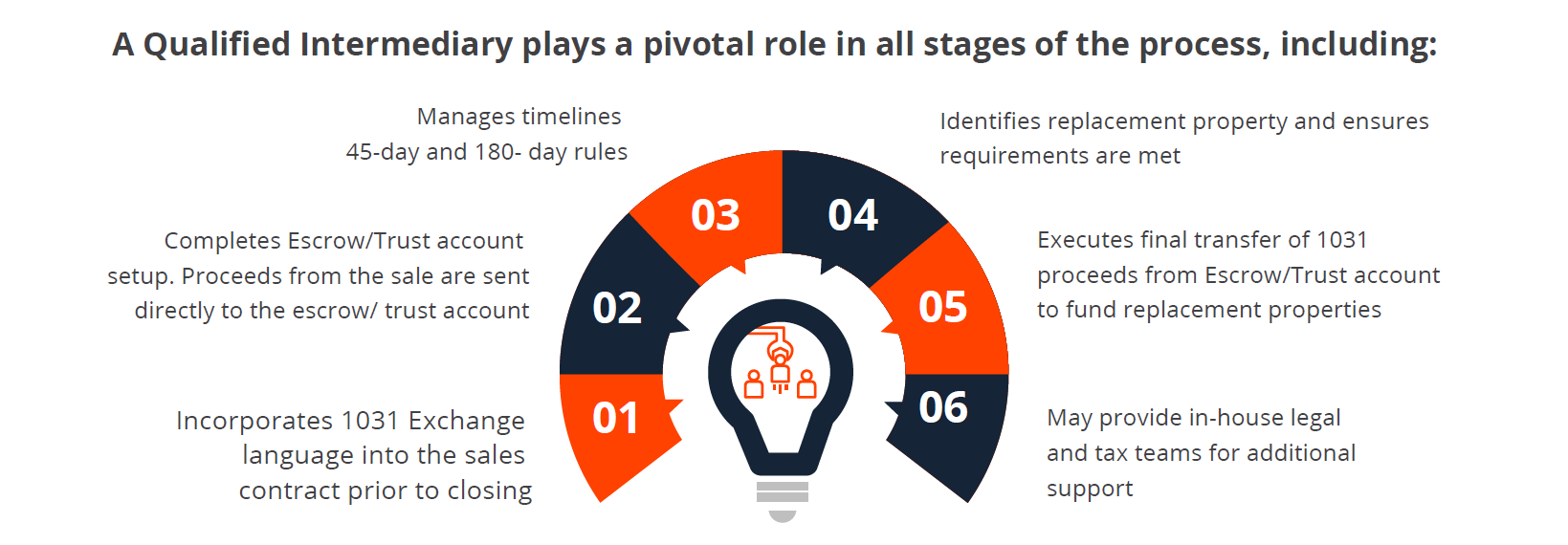
A Qualified Intermediary (QI) is an independent, third-party entity that facilitates a 1031 exchange on behalf of the investor. The QI is not the investor, an agent of the investor, or a related party.
When you sell a property as part of a 1031 exchange, the QI’s main responsibility is to take possession of the sales proceeds and hold them in a segregated 1031 escrow account. This step is essential to maintain compliance with IRS Section 1031, which prohibits the taxpayer from taking either actual or constructive receipt of the funds.
If you were to receive the proceeds directly, the exchange would become invalid — and you’d immediately owe capital gains and depreciation recapture taxes. The QI safeguards your funds and ensures the transaction adheres to all IRS regulations.
What role does the Qualified Intermediary (QI) play in an exchange?
Think of the QI as the linchpin that keeps all parts of the exchange together. Their core responsibility is to restrict your access to sales proceeds while maintaining compliance with IRS “safe harbor” rules (Reg. 1.1031(k)-1(g)(4)).
To qualify for safe harbor protection, there must be a written agreement between you (the taxpayer) and the QI that limits your ability to receive, borrow, or otherwise access the funds. The QI doesn’t need to appear in the chain of title — their authority comes from this agreement.
Common Services Provided by a Qualified Intermediary:
- Holding exchange proceeds in a qualified escrow or trust account
- Coordinating with your attorney, CPA, and closing agents
- Preparing essential 1031 exchange documentation (Exchange Agreement, Assignment, Notice of Assignment, etc.)
- Providing guidance and timeline management throughout the process
- Facilitating both the sale of the relinquished property and the purchase of the replacement property
- Authorizing the release of funds to complete the exchange
What Steps are involved in a 1031 Exchange?
While the concept of a 1031 exchange is straightforward, the execution requires precision and adherence to strict IRS timelines. Below is a simplified breakdown of the process from the QI’s perspective:
Step 1: Consult with a Qualified Intermediary (QI) before you decide to sell your property.
Step 2: Prior to closing, (the seller) implement 1031 exchange language into the contract to acknowledge the future use of an exchange.
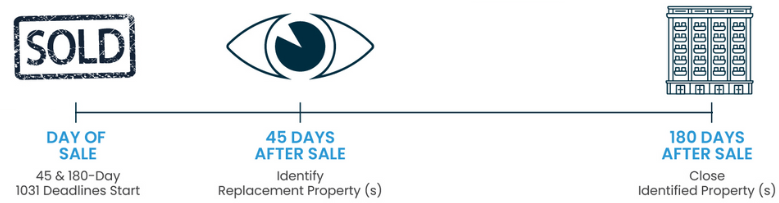
Step 3: 45-Day Identification Period: Once the property is sold, the exchanger has 45 calendar days from the day of closing to identify what replacement property(s) will be acquired.
Step 4: 180-Day Closing Period: Once the properties are identified, the exchanger has an additional 135 calendar days (180 days from close) to close on the properties identified in the 45-day ID period.
Step 5: At closing, the QI will release the funds to satisfy the purchase.
Read The 1031 Exchange Process Explained for additional details.
Costs and Pricing Structures
Qualified Intermediaries typically charge fees based on the complexity of your exchange and the services required. Common pricing models include:
- Flat Fee: A single, upfront cost for a standard exchange.
- Interest-Based Fee: The QI may retain part of the interest earned on your escrowed funds during the exchange period.
Typical pricing ranges:
- $800–$1,500 for standard delayed exchanges
- $1,500+ for more complex exchanges (reverse or improvement exchanges)
While cost is important, it shouldn’t be your only consideration. A QI’s experience, security measures, and insurance coverage are equally critical when selecting a provider.
Always ask for a full fee disclosure, including potential additional costs or administrative charges, to avoid surprises.
Contact us today to speak with a Qualified Intermediary (QIs).
Questions for Your Qualified Intermediary (QI)?
Although the exchange process can complex, some basic due diligence questions you will want to ask your QI are:
- How long have you been a Qualified Intermediary (QI)?
- How many 1031 Exchanges have you administered (individual 1031 Exchange officer and 1031 Exchange Qualified Intermediary)?
- Do you hold clients’ 1031 Exchange funds in a segregated Qualified Trust Account or a Qualified Escrow Account?
- Do you maintain errors and omissions (E&O) insurance coverage to insure against any 1031 Exchange Qualified Intermediary liability?
- What is the policy limit of your errors and omissions insurance coverage?
- Do you maintain fidelity bond insurance coverage to insure against employee theft, embezzlement, or misappropriation of the 1031 Exchange funds?
- What is the policy limit of your fidelity bond coverage?
- Is your fidelity bond coverage “per occurrence” or merely “in aggregate”?
- Do you provide me with copies of your insurance binders so I can verify that your insurance coverage is still in full force and effect?
- Do your fidelity bond and errors and omissions (E&O) insurance policies cover just the 1031 Exchange Qualified Intermediary, or do they also cover numerous other related entity operations that might diminish the overall protection to me in the event of loss such as title insurance, escrow, etc.?
- What type of internal processes and internal audit controls have you implemented to protect my 1031 Exchange assets?
- Will an administrators call me prior to the disbursement of my 1031 Exchange funds to ensure that I want the funds disbursed (as opposed to disbursing when escrow calls)?
- Where are my 1031 Exchange funds held or invested?
Conclusion
It is imperative to choose an experienced Qualified Intermediary (QI) carefully since they are ultimately responsible for keeping your exchange Federally compliant with IRS tax laws and guide you through a successful exchange. An experienced QI who is familiar with all 1031 exchange laws could be a great addition to your real estate team and potentially save you millions in tax liabilities.
At Exchange-X, we do not offer tax advice or advice directly relating to taxes but can refer a list of trusted 1031 Qualified Intermediaries.
If you are considering a 1031 exchange for your property or have additional questions about the process, don’t go it alone. Our experts at 1031 Qualified Intermediary have helped countless investors navigate the 1031 exchange process and we would love to assist you as well.
📅 Ready to get started? To see whether a 1031 exchange is right for you, call (888) 245-1031, email info@1031qualifiedintermediary.net or schedule a consultation with one of our experts today.
Always consult with your tax advisor or attorney before embarking on a 1031 exchange to understand how it aligns with your financial situation and investment goals.

Download your free copy of “The Power of 1031 Exchanges” to learn more about how 1031 exchanges can complement your portfolio.