
Understanding One of the Most Overlooked Rules in a 1031 Exchange
Real estate investors who have completed a 1031 exchange know that successfully executing a “perfect” exchange requires attention to detail. The main goal of a 1031 exchange is simple: defer capital gains taxes, reinvest profits, and move equity into higher-performing assets.
But the IRS enforces strict 1031 exchange rules, and breaking them can lead to costly tax consequences. One of the most common pitfalls investors face involves something known as “boot.”
In this article we are going to touch upon two very important tax deferral tools used to compliment a 1031 Exchange including:
- What is 1031 Exchange Boot?
- Types of 1031 Exchange Boot.
- How to Offset 1031 Exchange Boot?
What is 1031 Exchange Boot?
1031 Exchange Boot, commonly referred to as “Boot” comes from old English, meaning “something given in addition to make an exchange equal.”
In the context of a 1031 exchange, boot refers to cash or other non-like-kind property received by the investor during the exchange. Essentially, boot is anything of value received that’s not a like-kind replacement property — and can trigger a taxable event.
Because it’s rare to find two properties with exactly equal values, it’s common for one party to contribute extra cash or property to balance the exchange. That “extra” value is what the IRS considers boot.
Types of 1031 Exchange Boot
To successfully complete a 1031 Exchange, the purchaser must exchange the relinquished property for an equal or greater amount including value (purchase price), equity and debt.
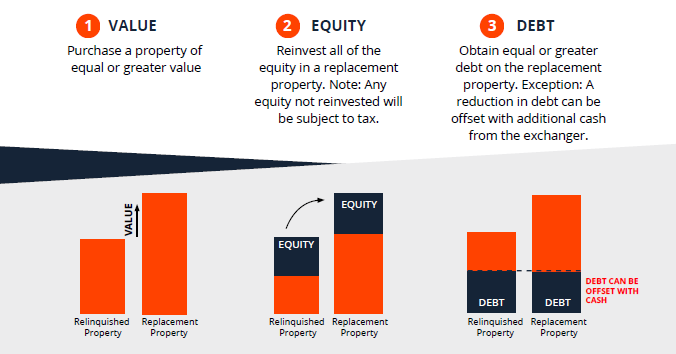
For example, if you sell a property for $1,000,000 and purchase another for $800,000, the difference in value of $200,000 is referred to as leftover boot. In this scenario, the IRS will recognize the unused proceeds from the relinquished property as taxable boot.
Boot can result from several factors in a real estate investment exchange. Below are the most common types of boot in real estate.
1. Sales Proceeds
Boot can arise from how sale proceeds are used at closing. If exchange funds are used to pay non-qualified or non-transaction costs, the IRS treats that money as if it were received in cash — resulting in taxable boot.
Examples of non-transaction costs include:
- Rent prorations.
- Utility escrow charges.
- Tenant damage deposits to the buyer.
✅ Tip: Paying for these items out-of-pocket will avoid turning sale proceeds into boot.
2. Equity or Cash Boot
Cash boot occurs when the cash received from selling the relinquished property exceeds the amount reinvested into the replacement property.
Example:
You sell a property for $1,000,000 ($500,000 in equity and $500,000 in debt) and reinvest only $400,000 in equity with $600,000 debt into your replacement property. The $100,000 not reinvested becomes taxable cash boot.
Cash boot can also arise from:
- Interest earned on exchange funds
- Seller-paid repairs or credits applied to the buyer
3. Mortgage Boot or Debt Reduction Boot
Mortgage boot (also known as debt reduction boot) occurs when you take on less debt on the replacement property than you had on the relinquished property.
Example:
If your old property had a $300,000 mortgage but your new property’s mortgage is only $200,000, you’ve reduced your debt by $100,000. The IRS treats that $100,000 as phantom income — effectively boot — since it’s debt relief you get to keep.
How to Offset or Avoid 1031 Exchange Boot?
Boot doesn’t automatically disqualify your exchange, but it can create taxable income on the amount of boot received. The goal is to minimize or offset that boot whenever possible.
Here are several strategies to consider:
Use cash to offset cash boot.
If you receive excess cash at closing, reinvest it immediately or use it to pay exchange-related costs.
Use cash to offset debt reduction.
Bringing in extra cash can replace reduced leverage on your replacement property.
Take on additional debt.
Adding financing on your replacement property can offset a reduction in your equity or loan balance.
Invest leftover funds into a Delaware Statutory Trust (DST).
A DST is an excellent way to place smaller leftover exchange funds into institutional-grade real estate while still satisfying 1031 exchange rules. Our partners at Exchange-X can be a resource for boot needs.
Tips to Avoid Creating Boot
- Always trade “across or up.” Never trade down in value, equity, or debt — this always results in boot.
- Bring cash to closing to cover any non-qualified costs, such as rent or utility prorations.
- Avoid over-financing. Only borrow enough to close the replacement property and cover exchange funds.
Conclusion
While boot doesn’t invalidate a 1031 exchange, it does introduce potential tax liability — which defeats part of the purpose of doing an exchange in the first place.
The essence of a 1031 exchange is to defer taxes, reinvest profits, and trade up into higher-quality or better-performing assets. Trading down in value, equity, or debt almost always results in boot, so the goal should always be to trade equal or greater.
Don’t settle for paying hefty taxes on unused 1031 exchange boot.
Furthermore, investing in a Delaware Statutory Trust (DST) property is a great option to consider when needing to replace leftover boot funds. A DST allows exchangers to keep their capital working for them while diversifying their portfolio and satisfying the 1031 “trade-up” rules. With low minimum investments, a DST property can be extremely flexible when faced with IRS boot taxes. Contact our partners at Exchange-X to learn more.
📅 Ready to get started? To see whether a 1031 exchange is right for you, call (888) 245-1031, email info@1031qualifiedintermediary.net or schedule a consultation with one of our experts today.
Always consult with your tax advisor or attorney before embarking on a 1031 exchange to understand how it aligns with your financial situation and investment goals.

Download your free copy of “The Power of 1031 Exchanges” to learn more about how 1031 exchanges can complement your portfolio.